
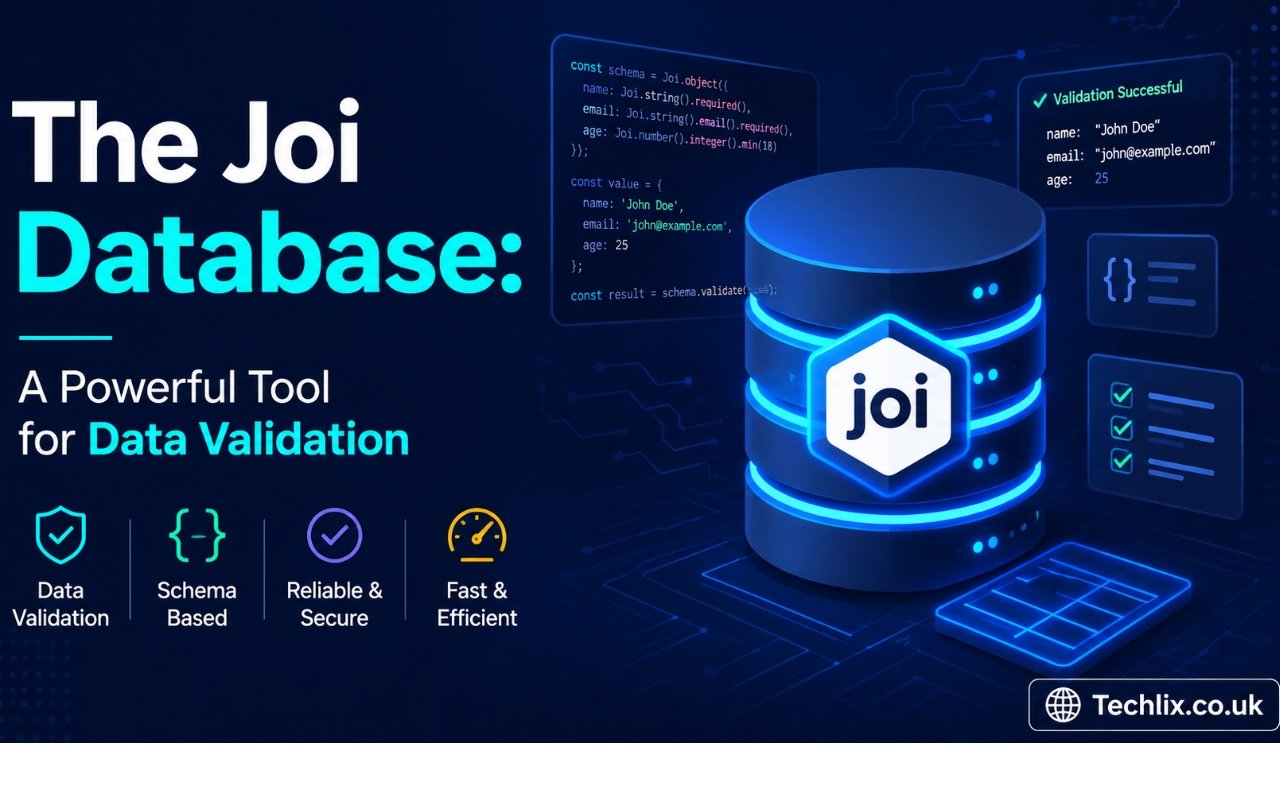
Have you ever searched for a database platform that promises speed, flexibility, and easier data management without the usual complexity? That’s exactly why the joi database has suddenly become a trending topic across technology communities, businesses, and developers in the United States. As organizations generate larger volumes of information than ever before, the need for smarter database solutions continues to grow. Industry experts believe that platforms focusing on performance, scalability, and modern architecture are shaping the future of data management. But what makes this database worth discussing, and why are more people searching for it today? Here’s everything you need to know.
What Is the Joi Database?
The the joi database refers to a modern database solution designed to simplify how structured information is stored, managed, and accessed. While many traditional databases require extensive administration and complex configurations, newer database technologies are focusing on speed, automation, scalability, and improved developer experience. This shift has made modern database platforms increasingly attractive for businesses handling growing volumes of digital information.
Organizations in the United States are constantly looking for systems capable of supporting web applications, enterprise software, analytics, and cloud-based services. Database technology now plays a critical role in digital transformation, making efficient storage and fast data retrieval essential. As companies prioritize automation and cloud infrastructure, interest in innovative database solutions continues to rise across multiple industries.
Why the Joi Database Is Gaining Attention
One of the biggest reasons behind the growing popularity of the joi database is the increasing demand for databases that can scale without sacrificing performance. Businesses today collect customer information, transaction records, analytics, and operational data around the clock. Traditional systems often struggle under heavy workloads, encouraging organizations to adopt more flexible solutions.
Technology experts also highlight the importance of developer productivity. Modern databases reduce repetitive maintenance tasks, simplify deployments, and integrate more easily with cloud environments. As software development cycles become faster, businesses want database platforms that support continuous innovation while maintaining high levels of security and reliability.
Key Features That Make the Joi Database Stand Out
A significant advantage of the joi database is its emphasis on performance optimization. Efficient indexing, rapid query execution, and optimized storage mechanisms help applications respond more quickly even as datasets continue expanding. Faster performance directly contributes to better customer experiences, especially for businesses operating online.
Another noteworthy feature is scalability. Instead of requiring expensive hardware upgrades, many modern database platforms support horizontal scaling, allowing organizations to add resources as demand grows. Combined with automated backups, disaster recovery capabilities, and cloud compatibility, these features make database management considerably more efficient than older approaches.
How Businesses Can Benefit from the Joi Database
Businesses across retail, healthcare, education, finance, and technology increasingly depend on reliable databases to support daily operations. The joi database offers organizations the flexibility needed to manage customer records, product catalogs, financial transactions, reporting systems, and business intelligence initiatives from a centralized platform.
Operational efficiency is another major advantage. Automated maintenance processes reduce manual workloads for database administrators while improving system availability. Less downtime means employees remain productive, customers experience fewer interruptions, and organizations can focus on delivering value instead of troubleshooting infrastructure problems.
Database Security and Data Protection
Security has become one of the most important considerations for every modern database platform. Cyberattacks continue increasing worldwide, making robust protection mechanisms essential for safeguarding valuable business information. Encryption, authentication controls, user permissions, and audit logging represent some of the standard security practices adopted across advanced database environments.
The the joi database also reflects the industry’s broader movement toward stronger compliance standards. Businesses operating in regulated industries must protect customer information while complying with legal requirements regarding privacy and data governance. Modern database technologies help organizations meet these expectations through improved monitoring and secure access management.
Cloud Integration and Modern Infrastructure
Cloud computing has transformed how businesses deploy applications and manage infrastructure. Instead of maintaining expensive physical servers, organizations increasingly rely on cloud providers to host mission-critical systems. Database platforms that integrate seamlessly with cloud environments have become highly desirable because they offer greater flexibility and lower operational costs.
Cloud-native architecture also improves disaster recovery and business continuity. Automatic backups, geographic redundancy, and scalable computing resources ensure that organizations can continue operating even during unexpected disruptions. This approach supports both startups and large enterprises looking for resilient, future-ready database solutions.
Performance Compared with Traditional Databases
Legacy database systems remain widely used, but many organizations face challenges related to maintenance complexity, limited scalability, and rising infrastructure costs. As digital workloads continue growing, businesses increasingly evaluate newer technologies capable of supporting modern application requirements more efficiently.
The the joi database reflects this broader evolution by emphasizing simplified management alongside improved responsiveness. Faster query processing, intelligent optimization, and better resource utilization enable organizations to deliver smoother digital experiences. Developers benefit from quicker testing cycles, while end users enjoy more responsive applications across desktop and mobile platforms.
Industries That Can Use the Joi Database
Healthcare providers manage sensitive patient records requiring secure storage and rapid access. Financial institutions process millions of transactions daily while maintaining strict compliance standards. Educational institutions store academic records, research data, and student information. Retail businesses depend on databases to manage inventory, customer relationships, and online shopping experiences.
Technology companies also represent a significant audience for advanced database platforms. Software-as-a-Service providers, artificial intelligence startups, and e-commerce businesses require reliable systems capable of processing enormous amounts of information efficiently. Flexible database architectures support innovation while reducing infrastructure bottlenecks during periods of rapid growth.
Future Trends Shaping Database Technology
Artificial intelligence is beginning to influence database management in meaningful ways. Intelligent query optimization, predictive maintenance, automated indexing, and anomaly detection are helping administrators manage increasingly complex systems more effectively. AI-powered tools may soon become standard features across next-generation database platforms.
Industry analysts estimate that global enterprise data volumes will continue growing exponentially throughout the coming decade. This expansion creates opportunities for database technologies emphasizing automation, cloud scalability, and high availability. Organizations investing in modern database infrastructure today are positioning themselves for future digital transformation initiatives.
Quick Facts About the Joi Database
Modern database platforms emphasize flexibility, performance, and automation over traditional manual administration methods. They are designed to support cloud infrastructure, enterprise applications, analytics, and high-volume transactional systems while reducing operational complexity.
Key related topics include cloud database, data management, SQL database, NoSQL database, database security, enterprise database, scalable database architecture, and data storage solutions. These concepts continue shaping how organizations build and maintain modern digital services throughout the United States.
Final Thoughts
The growing interest surrounding the joi database reflects a larger transformation happening across the technology industry. Businesses no longer view databases as simple storage systems. Instead, they recognize them as strategic assets capable of driving innovation, improving operational efficiency, supporting artificial intelligence, and enabling better customer experiences.
As organizations continue embracing cloud computing, automation, and digital transformation, modern database platforms are expected to play an even larger role in business success. Whether you’re a developer, IT professional, startup founder, or enterprise decision-maker, understanding emerging database technologies can help you stay ahead in an increasingly data-driven world.
If you found this guide helpful, share it with your colleagues, bookmark it for future reference, and continue exploring the latest developments in database technology to stay competitive in the rapidly evolving digital landscape.
FAQs
What is the joi database?
The the joi database refers to a modern database solution focused on efficient data storage, management, scalability, and performance for businesses and developers.
Why is the joi database becoming popular?
Its growing popularity is driven by increasing demand for scalable infrastructure, cloud integration, better performance, improved security, and simplified database administration.
Can small businesses benefit from the joi database?
Yes. Small businesses can benefit from efficient data management, lower maintenance requirements, cloud compatibility, and the ability to scale as operations grow.
Is the joi database suitable for enterprise applications?
Modern database platforms are commonly designed to support enterprise workloads, including analytics, customer management systems, financial applications, and cloud services.
What industries can use the joi database?
Healthcare, finance, retail, education, manufacturing, technology, logistics, and e-commerce companies can all benefit from modern database solutions depending on their operational needs.
What are the related technologies?
Popular related technologies include cloud databases, SQL, NoSQL, distributed databases, database security, AI-powered analytics, data warehousing, and scalable storage infrastructure.
Read more also: ig story viewer mollygram: Why Millions Are Turning to Anonymous Instagram Story Viewing in 2026