
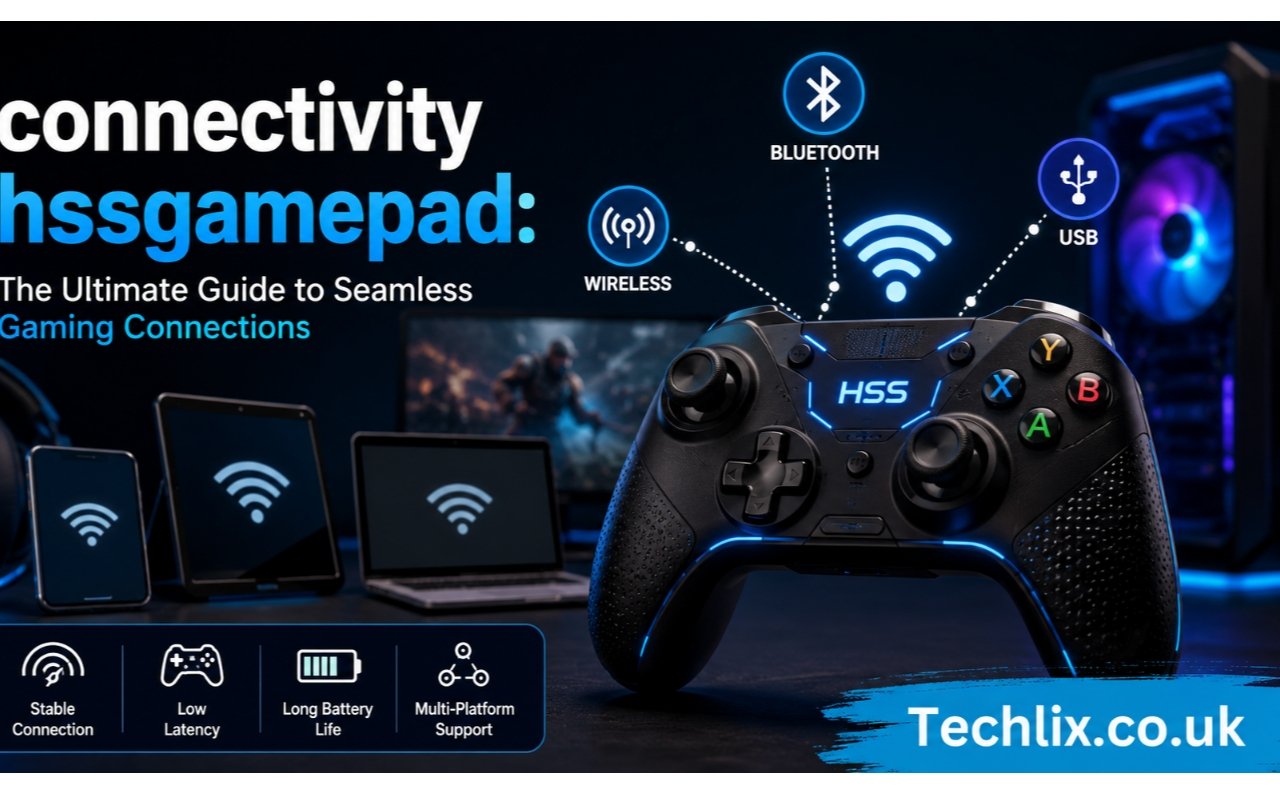
Mobile gaming is no longer a casual time-killer. For millions of players across the United States, it has become a daily habit, a competitive hobby, and in some cases, a serious content-creation space. That is exactly why connectivity hssgamepad has started getting attention among gamers who want smoother controls, quicker pairing, and fewer frustrating disconnects in the middle of a match. A controller can look premium on paper, but if the connection drops during a race, shooter, or sports title, the whole experience falls apart in seconds.
What makes this topic more interesting is that gamepad connectivity is now one of the biggest deciding factors for mobile and cloud gamers. Players want instant Bluetooth pairing, low input lag, broad device compatibility, and stable performance across Android, tablets, laptops, and even smart TVs. That is where connectivity hssgamepad enters the conversation. Whether you are trying to understand what makes it useful, how it compares with other mobile controllers, or why stable wireless performance matters more than ever in 2026, this guide breaks it all down in a way that is practical, current, and easy to follow.
Why connectivity hssgamepad is getting attention in the gaming world
The modern gamer expects convenience. Nobody wants to spend 15 minutes reconnecting a controller, updating firmware, and troubleshooting Bluetooth settings before a game even loads. That shift in user behavior is one reason the phrase connectivity hssgamepad is becoming more relevant. Gamers are actively searching for controllers that can pair quickly, stay connected under pressure, and work across multiple devices without complicated setup steps. In an era where cloud gaming, battle royale titles, and competitive mobile shooters dominate screen time, connection quality has become almost as important as graphics and battery life.
Another reason for the rising interest is the way gaming itself has changed. The average player is no longer limited to one device. A single gamer may switch from an Android phone to a tablet, then to a PC or streaming device within the same day. That makes cross-platform controller support a major selling point. If connectivity hssgamepad can deliver dependable pairing and stable performance across those environments, it becomes more than just another accessory. It becomes part of a broader gaming setup built around speed, flexibility, and uninterrupted play.
What connectivity hssgamepad actually means for everyday players
At its core, connectivity hssgamepad refers to how well the HSSGamepad connects and communicates with gaming devices. That includes Bluetooth pairing speed, wireless range, response time, compatibility with operating systems, and the ability to maintain a stable link during long sessions. For casual readers, that may sound technical, but in real use it translates to very simple things: your controller should connect fast, your button presses should register instantly, and your game should not freeze because the controller suddenly stopped responding.
For everyday players, these details can make a dramatic difference. Imagine playing a football game and missing a decisive shot because the analog input lagged for a split second. Or think about a racing title where the steering feels delayed due to a weak wireless signal. Those moments are why gamepad connectivity matters so much. The promise of connectivity hssgamepad is not just about linking a controller to a phone. It is about making gameplay feel consistent, responsive, and reliable from the first match to the last.
The biggest features gamers expect from connectivity hssgamepad
The first feature people usually care about is fast and simple pairing. A strong controller should be discoverable in seconds, connect with minimal prompts, and reconnect automatically after the first setup. If a user has to keep deleting and re-pairing the device, the experience quickly becomes annoying. This is why discussions around connectivity hssgamepad often focus on ease of setup. Gamers want something that works right away, especially when they are jumping into short gaming sessions between classes, work breaks, or commutes.
The second major expectation is low-latency performance. Input delay is one of the most frustrating problems in gaming, particularly in competitive genres. A high-quality connection should make every jump, aim adjustment, and movement feel immediate. On top of that, users now expect wider compatibility, battery efficiency, and firmware support. A gamepad that works on Android but struggles on tablets or cloud gaming apps loses a lot of value. So when players talk about connectivity hssgamepad, they are often evaluating an entire ecosystem of performance rather than a single Bluetooth feature.
How wireless gamepad technology has evolved in recent years
A few years ago, many mobile controllers were treated as secondary accessories. They worked well enough for basic gaming, but pairing issues, lag spikes, and compatibility limitations were common. Today, the market is far more demanding. Bluetooth standards have improved, cloud gaming has expanded, and smartphone hardware is powerful enough to run console-style titles. As a result, gamers now notice connection quality immediately. A weak controller stands out fast, and a strong one earns repeat use. That context helps explain why terms like connectivity hssgamepad are showing up more often in gaming discussions and search trends.
The evolution is not just about speed. It is also about consistency. Modern users want a controller that remembers devices, handles long sessions, and performs well in different physical environments. A stable connection in a quiet room is one thing, but a great controller should also handle everyday interference from Wi-Fi networks, earbuds, smartwatches, and other nearby Bluetooth devices. That is where smart engineering matters. If connectivity hssgamepad is designed with current gaming habits in mind, it can meet the expectations of a player base that has become much less forgiving of technical hiccups.
Connectivity hssgamepad and mobile gaming performance: why the connection matters
The rise of mobile gaming in the United States has changed what players expect from handheld accessories. Competitive shooters, sports simulators, fighting games, and open-world titles are no longer niche on mobile. Many of them demand quick reactions and accurate inputs, which means touch controls often feel limiting. A wireless controller can solve that problem, but only if the connection is stable. That is why connectivity hssgamepad matters beyond the setup stage. The real test begins once the match starts and the game demands consistent real-time response.
Poor connectivity can affect more than just movement. It can impact aiming, menu navigation, camera control, and even the player’s confidence. Gamers often perform worse when they do not trust their hardware. In contrast, a controller with strong connectivity hssgamepad performance can make the entire experience feel smoother and more immersive. That is especially important for players who stream gameplay, compete in ranked modes, or spend hours in games that reward precision. The difference between a fun session and a frustrating one often comes down to the invisible quality of the wireless link.
Device compatibility is now a major part of the connectivity hssgamepad conversation
A controller that only works well on one platform feels outdated in 2026. Today’s players expect flexibility. They may use Android for mobile games, a Windows laptop for emulators, a tablet for cloud gaming, and a smart TV for casual couch play. This is why compatibility has become a core part of the connectivity hssgamepad discussion. Users want to know whether the controller supports multiple systems, whether remapping is available, and whether popular games detect it correctly without complicated third-party tools.
This demand is tied directly to value for money. Consumers in the United States are comparing controllers more carefully than before, especially as accessory prices continue to climb. A gamepad that connects across several devices feels like a smarter purchase than one with limited support. That is why connectivity is no longer judged only by signal strength. It is also measured by versatility. When connectivity hssgamepad is described as strong, many buyers assume that means broad compatibility, quick switching between devices, and a setup experience that feels modern rather than outdated.
Common connectivity problems gamers face and how hssgamepad solutions can help
Even experienced players run into controller issues. The most common complaints include pairing failures, random disconnections, delayed input, unrecognized buttons, and poor performance after software updates. These problems may seem small individually, but they can completely ruin a gaming session. A player who spends money on a controller expects convenience, not constant troubleshooting. That is why any discussion of connectivity hssgamepad needs to address the real pain points gamers deal with every day rather than focusing only on marketing language.
The best connectivity-focused controllers solve these issues through a mix of smarter firmware, stronger Bluetooth implementation, better device memory, and improved battery management. If the HSSGamepad experience is built well, it should reduce reconnect time, keep latency low, and hold a stable connection even during long sessions. It should also offer a smoother recovery process when a device goes to sleep or switches apps. In practical terms, strong connectivity hssgamepad performance means fewer interruptions, fewer settings headaches, and more time actually playing the games users care about.
Why low input lag can decide whether a controller feels premium or frustrating
A gamepad can have great triggers, attractive design, and a comfortable grip, but if it introduces noticeable lag, players will abandon it quickly. Low input latency is one of the biggest quality markers in modern gaming accessories. In fast-paced titles, even tiny delays can make movement feel off or cause mistimed actions. That is one reason connectivity hssgamepad has become a more important keyword in gaming circles. Players are not only asking whether a controller connects; they are asking how quickly that connection translates into action on-screen.
This matters even more in competitive environments. In games that involve precise aiming, instant dodges, combo timing, or tactical movement, milliseconds matter psychologically as much as technically. A responsive controller creates trust between player and device. That trust improves confidence and often performance too. If connectivity hssgamepad delivers consistently low-latency input, it has a meaningful advantage in a crowded controller market. Gamers may forgive average design or slightly shorter battery life, but they rarely forgive lag that interferes with the moment-to-moment feel of a game.
Connectivity hssgamepad in cloud gaming and remote play setups
Cloud gaming has shifted the way people think about accessories. Services that stream games to phones, tablets, laptops, and TVs have made the controller more central than ever. In these environments, the player is already relying on internet stability, server response, and display performance. Add a weak controller connection on top of that, and the experience can become unplayable. This is why connectivity hssgamepad could matter especially for users who play through remote services instead of downloading everything locally.
In cloud gaming, every layer of delay stacks up. If your network is decent but your controller connection is inconsistent, the problem still feels like lag to the player. That is why a dependable wireless gamepad becomes part of the performance equation. A strong connectivity hssgamepad setup can help reduce one major point of friction in the cloud gaming chain. For users who jump between Xbox cloud titles, Android games, and PC streaming apps, that kind of stability can turn a good gaming night into a great one.
Battery life, firmware updates, and software support matter more than many players realize
A stable controller connection is not only about Bluetooth hardware. Battery health and software support play a huge role too. Controllers with poor power optimization may begin to behave unpredictably as the battery drops, causing signal instability or delayed input. Likewise, outdated firmware can create compatibility issues with newer devices or operating system updates. That is why smart buyers look beyond the basic pairing experience when evaluating connectivity hssgamepad. They want to know whether the device stays reliable after weeks and months of regular use.
Software support has become one of the quiet differentiators in the controller market. Brands that release firmware fixes, improve device compatibility, and respond to connection bugs tend to build stronger reputations. That matters because mobile gaming hardware changes quickly. New phones, new tablets, and new app versions can expose weaknesses in older accessories. A controller with strong connectivity hssgamepad performance should ideally be backed by ongoing updates and a support system that keeps it useful over time rather than leaving users stuck with the same issues indefinitely.
What the future of connectivity hssgamepad could look like in 2026 and beyond
The future of gamepad connectivity is likely to be shaped by three big trends: lower latency, smarter cross-device syncing, and deeper software integration. Players increasingly want controllers that behave like premium ecosystem products, not simple accessories. That means instant recognition across devices, customizable profiles, and near-seamless switching between gaming platforms. If HSSGamepad continues to improve in those areas, connectivity hssgamepad could become a bigger talking point among mobile gamers looking for an affordable but dependable controller option.
There is also a strong chance that controller software will become more personalized. Future gamepads may automatically detect the type of game being played, adjust sensitivity profiles, and optimize connectivity settings in the background. For users, that would mean less manual setup and more consistent performance. In a market where expectations keep rising, connectivity hssgamepad will not just be about connecting to a phone. It will be about delivering a smart, adaptive, multi-device gaming experience that feels invisible when it works and unforgettable when it does not.
Final thoughts on whether connectivity hssgamepad really matters for gamers
For anyone who plays mobile, cloud, or cross-platform games regularly, the answer is simple: yes, it matters a lot. A controller is only as good as the connection behind it. Design, comfort, and button layout all matter, but they cannot rescue a device that disconnects at the wrong time or introduces noticeable lag during a crucial moment. That is why connectivity hssgamepad deserves attention from gamers who want more than just a flashy accessory. The connection experience shapes everything from first impressions to long-term satisfaction.
As gaming habits continue to evolve, buyers will keep looking for accessories that make play easier rather than more complicated. The right controller should pair quickly, stay stable, work across devices, and feel responsive in every session. If that is what you are looking for, then paying attention to connectivity hssgamepad is not just smart, it is necessary. If you’re building a better gaming setup this year, start by evaluating the connection quality first, then the extras second. And if you want more in-depth gaming guides, controller comparisons, and keyword-focused breakdowns like this one, keep following for the next deep dive.
FAQs
What is connectivity hssgamepad?
Connectivity hssgamepad generally refers to the connection performance, compatibility, and wireless behavior of the HSSGamepad across devices such as smartphones, tablets, PCs, and cloud gaming platforms. It covers pairing speed, Bluetooth stability, input response, and overall ease of use.
Why is connectivity so important in a gaming controller?
Connectivity affects how quickly your button presses register, how stable the controller remains during long sessions, and whether it reconnects smoothly across different devices. A weak connection can cause lag, dropped inputs, or sudden disconnections.
Is connectivity hssgamepad useful for mobile gaming?
Yes. For mobile gamers, stable controller connectivity can improve accuracy, comfort, and responsiveness in shooters, racing games, sports titles, and action games where touch controls may feel limiting.
Can connectivity hssgamepad matter for cloud gaming too?
Absolutely. In cloud gaming, players already depend on network quality, so a controller with poor wireless stability can make overall lag feel even worse. A dependable connection helps keep gameplay smoother.
What should I check before buying a controller focused on connectivity?
Look at Bluetooth performance, device compatibility, latency, battery life, firmware support, and whether the controller works well with your preferred games and platforms. These factors usually matter more than design alone.